If conservation is a long, complex journey, why do we keep trying to tell it as though there's a quick and simple answer?
Conservation is rarely a straight path. It takes time, involves countless people, and often asks us to work towards a future we may never see ourselves. Yet we keep looking for quick fixes and simple answers to deeply intricate problems.
Aiita calls this the Conservationist’s Dilemma–the subject of his new writing endeavour.
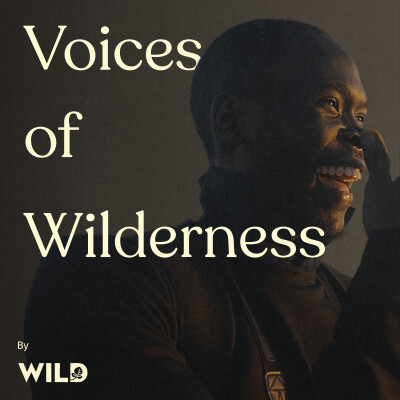
In this episode, Jackie meets Aiita Joshua Apamaku, a wildlife biologist, National Geographic Explorer from Uganda, and Co-Chair of the IUCN World Commission on Protected Areas Wilderness Specialist Group. His work brings together science, storytelling, and more inclusive approaches to conservation.
Together, they explore how to bring stories into policy spaces, communicate without losing people in jargon, and embrace conservation as a long-term process rather than a search for quick fixes.
What would happen if we started telling a different kind of story?
Before listening to the episode, please consider supporting our work at WILD, which allows us to dedicate time to creating these conversations for you.
Follow #VoW on Instagram & Substack
Hosted on Ausha. See ausha.co/privacy-policy for more information.
 Apple Podcasts
 Spotify
 Deezer
 Amazon Music
 Castbox
 Overcast
 Castro
 Podcast Addict
 Pocket Casts
 Listen Notes
 Podcast Index
 Podchaser
If conservation is a long, complex journey, why do we keep trying to tell it as though there's a quick and simple answer?
Conservation is rarely a straight path. It takes time, involves countless people, and often asks us to work towards a future we may never see ourselves. Yet we keep looking for quick fixes and simple answers to deeply intricate problems.
Aiita calls this the Conservationist’s Dilemma–the subject of his new writing endeavour.
In this episode, Jackie meets Aiita Joshua Apamaku, a wildlife biologist, National Geographic Explorer from Uganda, and Co-Chair of the IUCN World Commission on Protected Areas Wilderness Specialist Group. His work brings together science, storytelling, and more inclusive approaches to conservation.
Together, they explore how to bring stories into policy spaces, communicate without losing people in jargon, and embrace conservation as a long-term process rather than a search for quick fixes.
What would happen if we started telling a different kind of story?
Before listening to the episode, please consider supporting our work at WILD, which allows us to dedicate time to creating these conversations for you.
Follow #VoW on Instagram & Substack
Hosted on Ausha. See ausha.co/privacy-policy for more information.